
Workplace and travel briefs
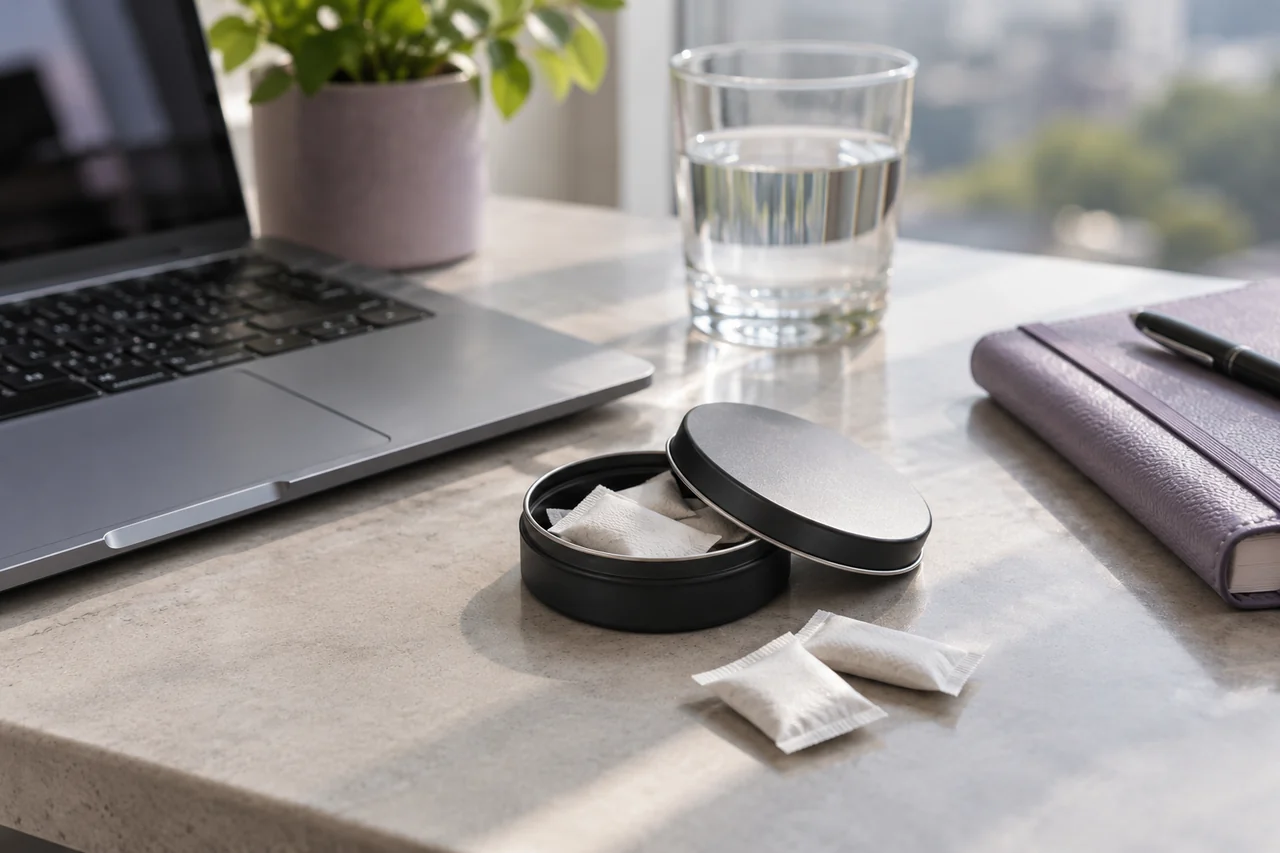
A setting such as travel or work can guide product design without turning into a medical or performance indication.
Describe the context
A compact retail pack, discreet handling and a restrained sensory profile may be useful design goals. Specify the physical circumstances the product is meant to suit. Do not assume that use in an office or on a journey establishes improved performance or treatment of anxiety.
Review the intended audience
Keep the brief within an appropriate adult audience and assess the actual ingredients and warnings. Student-related search phrases should not lead to youth-targeted health claims or promises of exam performance. The user population is part of the safety and market review.
Plan the travel pack
Consider pack closure, handling, labeling, distribution conditions and destination restrictions. An individual barrier-pack study may answer different questions from a repeatedly opened tin. Do not promise all-country travel or customs acceptance without the relevant review.
Write restrained claims
A travel routine is not evidence for relief of flight anxiety, panic attacks, nausea or another condition. A workplace concept is not proof of alertness or cognitive improvement. Keep the design brief, composition and proposed benefit claim as distinct decisions.
Put it in your brief
- Adult context
- Physical design goals
- Ingredient warnings
- Pack and destination review
- Claims boundaries
For each item, record the decision owner, the information needed and the approval that allows the next stage to proceed. Unresolved questions should remain visible in the project brief instead of being replaced by an assumed specification.
This guide supports business planning. Formula, safety, intended-use and destination-market decisions require project-specific review. No pouch efficacy, onset or product authorization is established here.
Related project pages: development services, quality planning and sample enquiries.