
Pouches, gummies and tablets
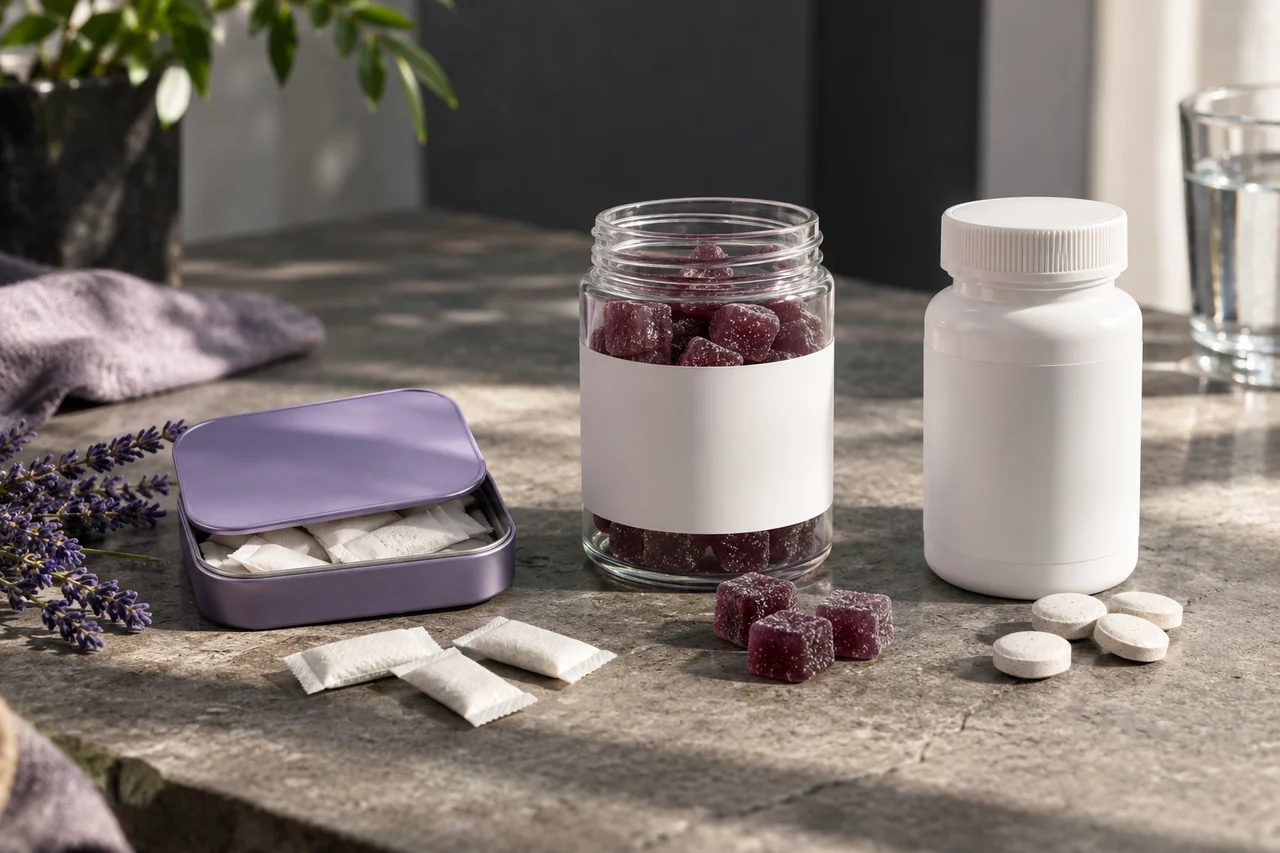
Compare actual product specifications and intended experiences rather than ranking entire formats as universally better.
Choose the comparison basis
Identify the ingredients, amounts, intended use, adult audience and market. A comparison with an unrelated formula cannot establish a delivery advantage. Decide whether the buyer is comparing portability, sensory experience, manufacturing needs or a supported physiological endpoint.
List practical differences
A pouch requires material and seam review; a gummy has texture and composition considerations; a tablet or capsule has a different manufacturing and use format. These practical differences help write a brief. They do not, by themselves, show efficacy or speed.
Assess the packaging system
Compare retail pack size, opening and storage, protection, shipping and label space. Include the intended number of units per pack. A convenient tin is only one part of the decision if the formula needs a different barrier configuration.
State evidence limits
A universal fast-acting or stronger claim is not supported by a format description. Identify the exact evidence needed for a proposed comparison. If it is unavailable, explain the practical format differences without implying a clinical conclusion.
Put it in your brief
- Matched specifications
- Practical experience
- Manufacturing route
- Packaging needs
- Evidence for comparison
For each item, record the decision owner, the information needed and the approval that allows the next stage to proceed. Unresolved questions should remain visible in the project brief instead of being replaced by an assumed specification.
This guide supports business planning. Formula, safety, intended-use and destination-market decisions require project-specific review. No pouch efficacy, onset or product authorization is established here.
Related project pages: development services, quality planning and sample enquiries.